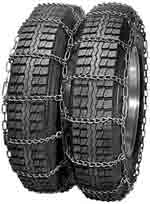
Videos - Learn How To Chain Up a Big Rig Semi Truck or 18 Wheeler. Experienced Truck Drivers Show You How to do it. Single Tire Chains and Double Tire Chains (Three-Railers) Installation Instructions.
Learn how to shift 10-speed through 18-speed manual transmissions. See How to backup into narrow docks, How to handle truck tire blowouts and how to drive in traffic.
Fastertruck News - 05/21/26 - 05:31:03am - The Federal Motor Carrier Safety Administration (FMCSA) will award $217 million to the trucking and bus industries through multiple grant programs. Eligible applicants include states, educational ...
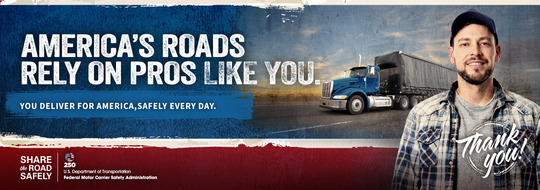
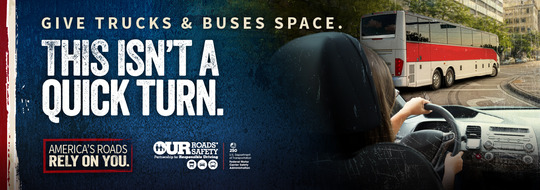
FMCSA is rolling out a fresh new look with updated campaign assets designed for every platform and audience. The campaign reminds everyone that sharing the road safely with large trucks and buses is a responsibility we all share— while providing practical tips and information to help everyone make safer decisions behind the wheel.
For passenger vehicle drivers, it's a reminder to stay out of blind spots, give large trucks and buses extra space to stop, and remember that large vehicles need room to make wide turns. For the professional drivers who keep America moving, it reinforces safe driving behaviors such as staying focused, following the speed limit, and driving safely through work zones.
Find ready-to-share social posts, graphics, talking points, and printable resources tailored to each audience.
Get Ready for Our Roads, Our Safety® Week: June 1-5
Mark your calendars — this year's Our Roads, Our Safety® Week is right around the corner!
With the summer travel season kicking off, America celebrating its 250th birthday, and FIFA World Cup bringing visitors to cities across the country, there's no better time to focus on sharing the road safely.
Daily themes:
Monday, June 1 | See Big. DriveSmart Stay out of blind spots, never cut in front of a large truck or bus, and give them extra room to turn.
Tuesday, June 2 | Pros Lead the Way Professional drivers can set the standard for road safety by always staying focused and alert,maintaininga safe speed, navigating work zones carefully, and buckling up every trip.
Wednesday, June 3 |Power ofPartnerships When government, industry, law enforcement, and communities align, safety outcomes improve for everyone.
Thursday, June 4 |Building Safe Habits Early It's never too early to learn how to share the road with large trucks and buses. Build safe habits now.
Friday, June 5 |Professional Drivers. Professional Safety Professional drivers keep America's economy moving. When safety comes first, everyone on the road benefits.
Five days. One mission. Make your plan to participate today!
The annual FMCSA Road Safety Art Contest invites students to use their creativity to raise awareness of how to stay safe on the road, particularly when driving, biking, or walking around large trucks and buses. Submissions from students (K-12) are due Friday, June 5. Get those final submissions in now so you don't miss out!
This email was sent to fmcsa@ino.to using GovDelivery Communications Cloud on behalf of: Federal Motor Carrier Safety Administration · 1200 New Jersey Avenue SE · Washington, DC 20590
Fastertruck News - 05/20/26 - 05:31:45pm - FMCSA FY26 Grant Application Online Live Office Hours on Thursday, May 28, 2026
Navigating federal grant opportunities can be complex. But getting clear, reliable answers shouldn’t be.
That’s why the Federal Motor Carrier Safety Administration (FMCSA) is hosting a series of live, online Office Hours sessions to support applicants interested in upcoming Fiscal Year 2026 funding opportunities. These sessions are designed to give stakeholders direct access to FMCSA grant program experts and help ensure a clear understanding of each Notice of Funding Opportunity (NOFO).
1.FY26 High Priority — Commercial Motor Vehicle (HP-CMV) and FY26 High Priority — Innovative Technology Deployment (HP-ITD) NOFOs:
Each session will provide an opportunity to engage directly with FMCSA staff responsible for administering the agency’s grant programs.
The sessions are intentionally structured to be straightforward and accessible:
30-minute live format focused entirely on participant questions.
No formal presentation. This is your time to ask what matters most.
Real-time clarification on requirements and language within the NOFOs.
Whether you’re a first-time applicant or a returning partner, these Office Hours sessions are an opportunity to gain clarity and confidence before submitting your application.
Important Guidelines
To ensure fairness and consistency for all applicants, FMCSA staff will adhere to the following boundaries:
Staff can clarify information included in the NOFOs
Staff cannot assist with application development, including reviewing or editing proposal language
Questions related specifically to eligibility should be submitted via email to the appropriate grant program managers; these will be addressed outside of the live sessions
FMCSA Grants
FMCSA’s grant programs support a wide range of safety-focused efforts across the country — from commercial motor vehicle enforcement and compliance to driver training, data systems, and innovative technology deployment. These funding opportunities help state and local partners strengthen roadway safety, improve program effectiveness, and advance national transportation safety priorities. The four grant programs covered in these Office Hours sessions are:
High Priority — Commercial Motor Vehicle (HP-CMV): Funds activities and projects that improve commercial motor vehicle safety, including increasing public awareness, conducting safety data improvement projects, and developing new technologies.
High Priority — Innovative Technology Deployment (HP-ITD): Provides financial and technical assistance to states to deploy, operate, and maintain innovative road safety technologies, including commercial motor vehicle, commercial driver, and carrier-specific information systems and networks.
Commercial Driver’s License Program Implementation (CDLPI): Focused on the execution and improvement of the national Commercial Driver’s License program, including ensuring compliance with federal regulations governing the CDL program and achieving the mission of “One Driver — One License — One Record.”
Commercial Motor Vehicle Operator Safety Training (CMVOST): Aims to increase the number of CDL holders who have received enhanced operator safety training, with a focus on assisting current or former members of the U.S. Armed Forces and their spouses in transitioning to commercial motor vehicle careers.
FMCSA’s grant programs play a critical role in improving roadway safety, strengthening enforcement capabilities, and supporting innovation across the commercial motor vehicle industry. These Office Hours are part of a broader effort to make the application process more transparent for all who are interested and eligible.
If you’re considering applying for FY26 funding through an FMCSA grant, this is a valuable chance to connect directly with agency experts.
For questions or concerns, or if you require accommodations or have accessibility needs to participate in these Office Hours sessions, please contact us by Tuesday, May 26, at kyle.ford@dot.gov so we can ensure you have full access.
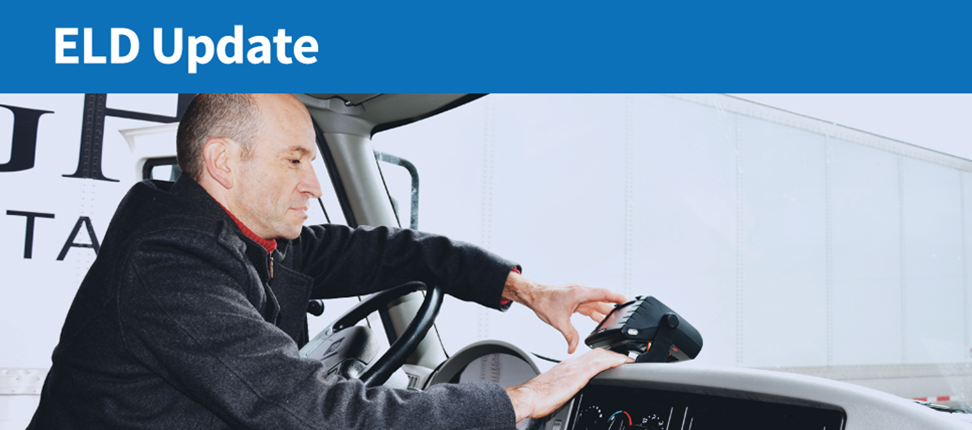
REVOKED ELDs: 12 ELDs Removed from FMCSA Registered Devices List
Replace revoked ELDs to remain in compliance with ELD requirements.
FMCSA has removed 12 ELDs from the list of Registered Electronic Logging Devices (ELDs).
Motor carriers and drivers using any of the revoked ELDs below have 60 days to replace them with compliant ELDs.
On May 20, 2026, FMCSA removed the following ELDs from the list of registered ELDs due to the companies' failure to meet the minimum requirements established in Title 49 CFR Appendix A to Subpart B of Part 395.
ELD Name
Model Number
ELD Identifier
ELD Provider
888 ELD
EIG8T
8RS262
MAUMAU LLC
DRAGON ELD
DRA
DRA782
Dragon ELD
ACTION ELD
ACT
ACT282
ACTION ELD
Mondo ELD HOS
MND-APL16
MNEL21
MONDOTRACKING SOLUTIONS LLC.
FIRST ELD
FRST
FRS185
FIRST ELD LLC
FIRST ELD V2.0
FRST
FRS200
FIRST ELD LLC
MTL ELD
MRS
MRS272
POWER ELD LLC
USPower ELD
USPower1
USPWR1
POWER ELD LLC
Sam Freight ELD
SFR8
SRS166
Sam Freight management LLC
DSGELOGS
DSGELOGS1
DSGEL1
DSG TRACKING LLC
COBRA ELD
COBR
COB980
Cobra Connect LLC
GT USA ELOGS
2.17.1 or up
GTU882
GT ELD
These ELDs now appear on FMCSA's Revoked Devices list.
Motor carriers have up to 60 days to replace the revoked ELDs with compliant ELDs. Motor carriers and drivers who use the ELDs listed above must take the following actions:
Discontinue using the revoked ELDs and revert to paper logs or logging software to record required hours of service data.
Replace the revoked ELDs with compliant ELDs from the Registered Devices list before July 20, 2026.
Motor carriers have up to 60 days to replace the revoked ELDs with compliant ELDs.
Motor carriers and drivers who continue to use the revoked ELDs listed above on or after July 20, 2026 will be in violation of 49 CFR 395.8(a)(1)—"No record of duty status" and drivers will be placed out-of-service (OOS) in accordance with the Commercial Vehicle Safety Alliance (CVSA) OOS Criteria.
If the ELD providers correct all identified deficiencies for its device, FMCSA will place the ELD back on the Registered Devices list and inform the industry and the field of the update. However, FMCSA strongly encourages motor carriers to take the actions listed above now to avoid compliance issues in the event that these deficiencies are not addressed by the ELD provider.
This email was sent to fmcsa@ino.to using GovDelivery Communications Cloud on behalf of: Federal Motor Carrier Safety Administration · 1200 New Jersey Avenue SE · Washington, DC 20590
Fastertruck News - 05/19/26 - 03:21:57pm - The Federal Motor Carrier Safety Administration is making $217 million in grant funding available for trucking and bus industry safety, workforce ...
FMCSA FY26 Grant Application Submission Period Now Open
May 2026
FMCSA Grant Submission Period Opens
Roadway safety is at the core of FMCSA's mission. Our job is to focus on ways to reduce crashes and fatalities involving large trucks and buses on our nation's roadways. That's a big job – one we know we can't do alone. That's why we partner with state organizations, local jurisdictions, academic institutions, training providers, and other entities to promote commercial motor vehicle (CMV) safety-related activities.
FMCSA has announced four Notices of Funding Opportunity (NOFOs) for FY2026 grant opportunities. Now's the time to gain information on eligibility requirements and the application process. There's about a 30-day window to complete the application.
Each grant has its own purpose and eligibility criteria. Organizations should check the list below to see if there's a suitable grant opportunity for them.
What type of projects receive FMCSA grant funding?
FMCSA provides funding for projects that:
Promote commercial motor vehicle (CMV) safety
Innovate CMV technology
Increase the number of safe and responsible CMV operators
And more!
Eligibility
Organizations such as nonprofits with 501(c)(3) status, colleges/universities, trucking schools, law enforcement agencies, state agencies, local government agencies, Federally recognized Native American Tribal governments, and other entities are eligible to apply for these grants, depending on the program. Individuals are not eligible. Check each grant program's eligibility guidelines to assess which program(s) may apply to your organization.
FREE TRAINING AND WEBINARS
Potential applicants can visit the online Grants Resource Center and gain training, guidance, and tools for a grant application and grant management assistance. To learn the finer points of writing an FMCSA grant application, view previously recorded video resources, including webinars and funding conferences. These resources provide helpful information to successfully apply. Applicants are strongly encouraged to review the three Title VI Compliance Program compliance resources on this website to learn about the requirements.
GET STARTED!
Start right away to research, identify, and prepare for a future grant application prior to FMCSA's NOFO announcement. If you decide to apply for a grant, one of the first steps to take is registering your organization at https://www.sam.gov/ or the System for Award Management. This process can take up to 15 business days. The second step is to register on the grants.gov website. This can take two to four weeks.
This email was sent to fmcsa@ino.to using GovDelivery Communications Cloud on behalf of: Federal Motor Carrier Safety Administration · 1200 New Jersey Avenue SE · Washington, DC 20590
This email and any files transmitted with it are confidential and intended solely for the use of the individual or entity to whom they are addressed. If you have received this email in error please notify support@webmail.com
Strengthening CMV Safety with Grant Partners: Highlights from the 2026 MCSAP Planning Meeting and ITD-PRISM Workshop
2026 MCSAP Planning Meeting and ITD-PRISM Workshop
The Federal Motor Carrier Safety Administration (FMCSA) recently hosted the annual 2026 MCSAP Planning Meeting and ITD-PRISM Workshop. This year’s program emphasized a “Focus on Fundamentals”. The well attended event brought together Motor Carrier Safety Assistance Program (MCSAP) lead agencies, Federal and State Innovative Technology Deployment (ITD), and Performance and Registration Information System Management (PRISM) team members.
A robust multi-track schedule incorporated a variety of topics sharing one consistent mission of reducing crashes, injuries and fatalities involving commercial motor vehicles (CMVs).
As FMCSA’s largest grant program, the Motor Carrier Safety Assistance Program (MCSAP) is a non-competitive formula grant which empowers state agencies to implement uniform, effective, and innovative CMV safety and crash reduction programs. By administering three-year Commercial Vehicle Safety Plans (CVSP), state partners and PRISM team members work hand-in-hand with the FMCSA to reduce crashes and improve the efficiency of our transportation systems.
The workshop provided a deep dive into the regulatory and operational tools that keep our roadways safe. Here are the highlights:
2027 Planning & Policy Updates: Attendees received a first look at the 2027 MCSAP Planning Memorandum and the updated MCSAP Comprehensive Policy (MCP), setting the strategic stage for the upcoming fiscal cycle.
Extensive discussion on the critical importance of effective, purposeful, and high quality CMV driver/vehicle inspections.
The Power of PRISM: Sessions focused on the “PRISM Effect,” exploring how carrier accountability and the Performance and Registration Information Systems Management program are vital in preventing crashes.
Legal Sufficiency and Enforcement: A critical segment of the meeting addressed Legal Sufficiency and Enforcement Changes, ensuring that state programs remain legally robust while adapting to current safety priorities.
Data Integrity and Tactics: With a strong emphasis on the “Fundamentals,” experts discussed DataQs requirements, the SafeSpect Datahub, and the Data Verification Process. High-quality data is the backbone of effective CMV safety tactics.
Combating the use of a CMV in Fraud and Human Trafficking: The workshop highlighted the industry’s role in social responsibility, including strategies for combating human trafficking and identifying “chameleon” or reincarnated carriers trying to bypass safety regulations.
2026 MCSAP Planning Meeting and ITD-PRISM Workshop
While focusing on the fundamentals, the event also looked towards the future of technology, community engagement, and ways to incorporate innovative approaches for the FY 2027 grant cycle. Several themes incorporated into this approach included;
IT Modernization: Updates on FMCSA IT modernization and the Innovative Technology Deployment (ITD) program showcased new tools for e-screening and truck parking technology.
Connecting Resources: The Office of Outreach and Education led discussions on “Alignment for Impact,” demonstrating how to better connect FMCSA national resources to state-level outreach initiatives.
This workshop reinforced collaboration necessary to further the mission of the FMCSA. By focusing on the fundamentals — from grant management to data accuracy — the MCSAP community is better equipped than ever to save lives on our nation’s highways.
REVOKED ELDs: Safe ELD and MYLOGS ELD Removed from FMCSA Registered Devices List
Replace revoked ELDs to remain in compliance with ELD requirements.
FMCSA has removed Safe ELD (IOS and Android) and MYLOGS ELD from the list of Registered Electronic Logging Devices (ELDs).
Motor carriers and drivers using the revoked ELDs below have 60 days to replace it with a compliant ELD.
On May 7, 2026, FMCSA removed the following ELDsfrom the list of registered ELDs due to the companies'failure to meet the minimum requirements established in Title 49 CFR Appendix A to Subpart B of Part 395.
ELD Name
Model Number
ELD Identifier
ELD Provider
Safe ELD
SafeELD-Android
ELD42A
BEMOREX, INC
Safe ELD
SafeELD-IOS
ELD42A
BEMOREX, INC
MYLOGS ELD
MYLGS2 (f/k/a MRS201)
MRS202 (f/k/a MRS201)
Mylogs Inc.
These ELDs now appears on FMCSA's Revoked Devices list.
Motor carriers have up to 60 days to replace the revoked ELDs with a compliant ELD. Motor carriers and drivers who use the ELDs listed above must take the following actions:
Discontinue using the revoked ELDs and revert to paper logs or logging software to record required hours of service data.
Replace the revoked ELDs with a compliant ELD from the Registered Devices list before July 7, 2026.
Motor carriers have up to 60 days to replace the revoked ELD with a compliant ELD.
Motor carriers and drivers who continue to use the revoked ELDs listed above on or after July 7, 2026 will be in violation of 49 CFR 395.8(a)(1)—"No record of duty status" and drivers will be placed out-of-service (OOS) in accordance with the Commercial Vehicle Safety Alliance (CVSA) OOS Criteria.
If the ELD providers correct all identified deficiencies for its device, FMCSA will place the ELDs back on the Registered Devices list and inform the industry and the field of the update. However, FMCSA strongly encourages motor carriers to take the actions listed above now to avoid compliance issues in the event that these deficiencies are not addressed by the ELD provider.
This email was sent to fmcsa@ino.to using GovDelivery Communications Cloud on behalf of: Federal Motor Carrier Safety Administration · 1200 New Jersey Avenue SE · Washington, DC 20590
This email and any files transmitted with it are confidential and intended solely for the use of the individual or entity to whom they are addressed. If you have received this email in error please notify support@webmail.com
Fastertruck News - 04/29/26 - 07:31:58am - Keeping school buses safe and reliable takes more than just fixing problems when they happen—it’s about planning ahead for every season. From winterizing engines to summer safety checks, proactive ...
Fastertruck News - 04/27/26 - 02:55:00pm - FMCSA Pre-Employment Screening Program. Making roads safer — one hire at a time.
When motor carriers evaluate a driver candidate, the Motor Vehicle Record (MVR) is usually the first document reviewed. It’s a valuable tool, but it doesn’t always tell the complete story.
MVRs typically reflect convictions and reportable crashes. What they often don’t capture are the roadside inspections and violations recorded during enforcement stops. For that information, carriers have another resource: the Pre-Employment Screening Program (PSP).
What PSP Provides
FMCSA’s Pre-Employment Screening Program gives motor carriers access to a driver’s federal safety data during the hiring process (with the driver’s written consent). A PSP report includes:
Five years of crash history
Three years of roadside inspection history
These records are drawn from FMCSA’s Motor Carrier Management Information System (MCMIS) and are available electronically, making them straightforward to request and review.
What the Data Shows
Carriers that use PSP see measurable differences in safety outcomes. An FMCSA study found that PSP users experienced:
8% fewer crashes
17% fewer out-of-service incidents
The study estimated that PSP users collectively prevented approximately 863 crashes and 3,600 out-of-service events compared to carriers that did not use the program.
PSP as Part of a Complete Hiring Process
PSP is not a replacement for interviews, road tests, or reference checks. It works best as one layer in a broader evaluation process — providing federal safety data that other hiring tools may not surface.
A few things worth noting when reviewing PSP reports:
Records now include “not preventable” determinations when a crash has been reviewed through FMCSA’s Crash Preventability Determination Program.
A crash preventability determination does not assign legal fault or liability.
The absence of a “not preventable” determination does not mean a crash was preventable.
Carriers should interpret PSP data in context, alongside other candidate information.
Getting Started with PSP
Motor carriers not currently using PSP can learn more and enroll at psp.fmcsa.dot.gov.
Drivers can also request a copy of their own record using PSP or submit a data challenge through the FMCSA DataQs system.
For questions about the program, contact the PSP support team at psphelp@tylertech.com.
Fastertruck News - 04/24/26 - 12:31:29am - A new 2026 school bus preventive maintenance schedule template has been released, aligning with updated FMCSA rules that now authorize electronic driver vehicle inspection reports. The template ...
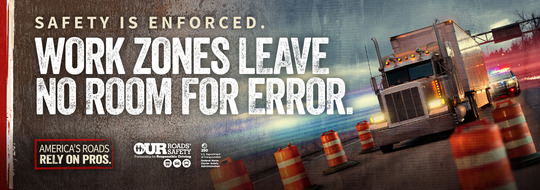
National Work Zone Awareness Week (April 20–24, 2026) is a reminder that one decision behind the wheel can save a life — or cost one.
Stay alert in work zones. Your expertise is their protection. America’s roads rely on pros. Our Roads, Our Safety(R).
Every year, thousands of crashes occur in work zones across the United States. For the men and women repairing roads, directing traffic, and rebuilding infrastructure, these zones are not just temporary inconveniences — they are workplaces.
As part of this nationwide effort, the Federal Motor Carrier Safety Administration (FMCSA) is proud to join transportation partners across the country in raising awareness and promoting safer driving behaviors in and around work zones.
From April 20–24, 2026, National Work Zone Awareness Week (NWZAW) calls on all road users to take responsibility for safety with this year’s theme: “Safe Actions, Save Lives.”
Why Work Zone Safety Still Demands Attention
Work zones are essential to keeping America moving — but they can also create unpredictable driving conditions. Narrowed lanes, shifting traffic patterns, reduced speeds, and the presence of workers and heavy equipment all increase the likelihood of specific crash types (rear-end collisions, sideswipe and lane-change crashes, run-off-road and barrier strikes, worker strikes, more complex driving errors, and more severe crash severity — particularly in environments where space is limited and conditions change quickly..
Since 1999, the Federal Highway Administration has partnered with the American Association of State Highway and Transportation Officials and the American Traffic Safety Services Association to lead a national effort to raise awareness and improve safety outcomes.
What started as a single event has grown into a nationwide movement — with states, agencies, and industry partners all working toward the same goal: saving lives.
This year, the Connecticut Department of Transportation hosted the official NWZAW kickoff event on Tuesday, April 21, in Farmington, Connecticut. The event brought together transportation leaders, safety officials, labor representatives, and families impacted by work zone incidents — reminding us that behind every statistic is a real person, a family, and a community.
Source: 2023 Fatality Analysis Reporting System (FARS) Annual Report File (ARF), National Highway Traffic Safety Administration (NHTSA), U.S. Department of Transportation. All data were downloaded in April 2025. Crash Report Sampling System (CRSS), NHTSA, U.S. Department of Transportation.
The CMV Factor: A Critical Safety Challenge
For the Federal Motor Carrier Safety Administration (FMCSA), work zone safety is especially critical. Commercial motor vehicles (CMVs) play a vital role in our economy — but data shows they are involved in a disproportionately high number of fatal work zone crashes:
Over 30% of fatal work zone crashes on urban interstates involve CMVs
More than 50% on rural interstates
Compared to 10–13% involvement in non-work zone fatal crashes
While overall traffic patterns fluctuated in 2020, the long-term trend since 2014 shows an increase in CMV involvement in fatal work zone crashes.
Source: Fatality Analysis Reporting System (FARS), National Highway Traffic Safety Administration, U.S. Department of Transportation. The 2019–2022 data were taken from the FARS final data files, while the 2023 data were from the FARS 2023 Annual Report File [ARF].
Beyond the devastating human toll, work zone crashes also carry significant economic and operational impacts. These incidents generate substantial costs related to emergency response, property damage, and insurance claims, but they also impose major user delay costs and vehicle delay costs. When a crash occurs in or near a work zone, traffic congestion can quickly ripple across surrounding corridors, leading to extended travel times for commuters, freight delays for commercial carriers, and disrupted delivery schedules. For the trucking industry in particular, these delays translate into lost productivity, increased fuel consumption, and reduced network reliability — ultimately affecting supply chains and the broader economy. Even minor incidents can create disproportionate delays due to the constrained nature of work zone traffic flow.
Estimated total costs reflect comprehensive economic and societal impacts of 2023 work zone crashes, using U.S. DOT value of a statistical life ($14.2M per fatality), injury severity cost proportions, and National Safety Council property-damage estimates; congestion impacts are informed by Texas A&M Transportation Institute research and INRIX 2024 data, assuming work zones account for ~10% of national traffic delay.
What’s Driving the Risk?
If there were a single cause behind work zone crashes, the solution would be simple. But federal safety data shows that’s not the case.
Insights from FMCSA and FHWA point instead to a combination of roadway conditions, traffic patterns, and driver behavior — all converging in ways that increase risk, especially for commercial motor vehicles (CMVs).
Work zones are, by design, dynamic and constrained environments. Lanes narrow. Traffic shifts. Shoulders disappear. These changes reduce the margin for error and make it more difficult for drivers — particularly those operating large trucks — to maintain safe positioning and control.[i] At the same time, speed differentials and sudden slowdowns are common as traffic approaches and moves through work zones. These conditions contribute to rear-end collisions, one of the most frequently observed crash types in these environments.[ii] Driver behavior also plays a critical role. Distraction or inattention — even for a moment — can have serious consequences in a setting where conditions change quickly and unpredictably.[iii]
For CMV drivers, the challenge is even greater. Large vehicles require more distance to stop, have larger blind spots, and are less maneuverable in tight or shifting lanes. These operational realities can make it harder to respond quickly to unexpected changes in traffic flow.³
Finally, many work zones are located along high-volume corridors, including key freight routes, where the mix of passenger vehicles and commercial traffic increases overall exposure to risk.¹
Taken together, these factors reinforce a central point: work zone safety is a shared challenge — one that requires coordinated solutions across agencies, industry, and every driver on the road.
What Safe Actions Look Like on the Road
The theme “Safe Actions, Save Lives” isn’t just a slogan — it’s a set of choices every driver makes. In work zones, that means:
Slowing down and obeying posted speed limits
Staying alert and eliminating distractions
Maintaining safe following distances
Expecting sudden stops or lane changes
Watching for workers and equipment near travel lanes
For CMV drivers in particular, these actions are critical given vehicle size, stopping distance, and visibility limitations.
Take Action: Be Part of the Solution
Safe Actions Save Lives
National Work Zone Awareness Week is a chance to turn awareness into action. Improving work zone safety takes coordination across the entire transportation ecosystem:
Federal, state, and local agencies
Law enforcement and emergency responders
Construction and maintenance crews
Fleet operators and professional drivers
Everyday motorists
No single group can solve this alone — but together, meaningful change is possible. Whether you’re a driver, fleet manager, safety professional, or advocate, you can help spread the message and make roads safer for everyone.
Safe actions save lives — and your choices matter every time you enter a work zone.
April Is Distracted Driving Awareness Month, and it’s a good time to take a hard look at the choices we all make behind the wheel.
Distracted driving can lead to deadly consequences on our roads. Cell phones — texting, talking, scrolling — are the most common distraction. But they’re not the only ones. Distracted driving is anything that takes your eyes off the road, your hands off the wheel, or your mind off driving, including adjusting the radio or GPS, eating, drinking, even reaching for something in the cab.
And those few seconds matter.
In 2024, distracted driving killed 3,208 people and injured more than 315,000. That’s thousands of lives changed because someone looked away at the wrong time.
Why this matters for CMV drivers
If you’re behind the wheel of a commercial motor vehicle, the stakes are higher. Large trucks and buses can weigh up to 80,000 pounds. They take longer to stop, are harder to maneuver, and leave less room for error. Even a momentary lapse in focus can have serious — or even fatal — consequences.
Federal regulations are clear: CMV drivers are prohibited from using handheld mobile devices while driving. Violations can mean fines, penalties, and even disqualification.
But beyond the rules, this is about safety, for CMV drivers and everyone sharing the road.
Simple steps that save lives
Safe driving isn’t complicated, but it does require full attention. Whether you are driving a CMV or a passenger vehicle, the basics go a long way:
Need to send a message? Pull over and park safely.
Set your GPS and route before you start driving.
Don’t scroll through apps or reach for your phone.
Ask a passenger to handle calls or texts.
If you’re struggling, put your phone out of reach — glove box, back seat, or cab storage.
Get enough rest. Drowsy driving is distraction, too.
Stay focused behind the wheel by following these tips: store your phone out of sight, set your navigation before leaving, get a good night’s rest.
Driving around trucks and buses? Stay alert.
Safety is a shared responsibility. One distracted move around a CMV can quickly turn into a dangerous situation. If you’re driving near a large truck or bus:
Give them space — they need more time to stop
Stay out of blind spots
Don’t cut in front of them
Stay focused and off your phone
Take action — on and off the road
Every year, tens of thousands of people lose their lives on our roadways, including thousands in crashes involving large trucks and buses. Professional drivers keep America moving. Whether you’re in a big rig or a passenger car, everyone has a role in keeping our roads safe. This month is about more than awareness; it’s about action.
Remind your friends and family: if you’re driving, that’s your only job
Speak up if your driver is distracted
Ask others to commit to distraction-free driving
Share the message and help spread awareness
FMCSA’s Distracted Driving campaign is part of the Our Roads, Our Safety® program, which reminds us that safety is everyone’s responsibility. Get tips, tools, and downloadable resources here.
Stay focused. Stay alert. And help make sure everyone gets home safe.
April is Distracted Driving Awareness Month—a time to reinforce the importance of staying focused behind the wheel. Distractions slow reaction time and increases risk for everyone sharing the road.
Professional drivers are highly trained and bring years of experience behind the wheel, understanding firsthand what it takes to operate safely. But even with that expertise, distraction can still create dangerous situations.
FMCSA encourages all drivers to take simple steps that make a real difference.
Put your phone away, set your navigation before you leave, and stay focused on the road ahead. By following these simple tips, everyone can help protect lives and support safer travel on our roads.
Help spread these important messages with FMCSA's new campaign resources. Promote distraction-free driving during Distracted Driving Awareness Month and beyond.
National Work Zone Awareness Week (NWZAW) is just around the corner—are you ready to help raise awareness as work zone season begins?
Work zones can be especially challenging for all drivers, particularly those operating large trucks and buses. Changing traffic patterns, reduced speed limits, and narrow lanes demand extra attention and caution to keep everyone safe.
This year's national kickoff event will be hosted by the Connecticut Department of Transportation on April 21, 2026. Throughout the week, FMCSA will join partners across the country to remind drivers that simple actions—like slowing down and planning routes ahead—can help protect roadway workers and everyone traveling through work zones. Explore NWZAW activities and access outreach materials to help share this important message in your community.
This email was sent to fmcsa@ino.to using GovDelivery Communications Cloud on behalf of: Federal Motor Carrier Safety Administration · 1200 New Jersey Avenue SE · Washington, DC 20590