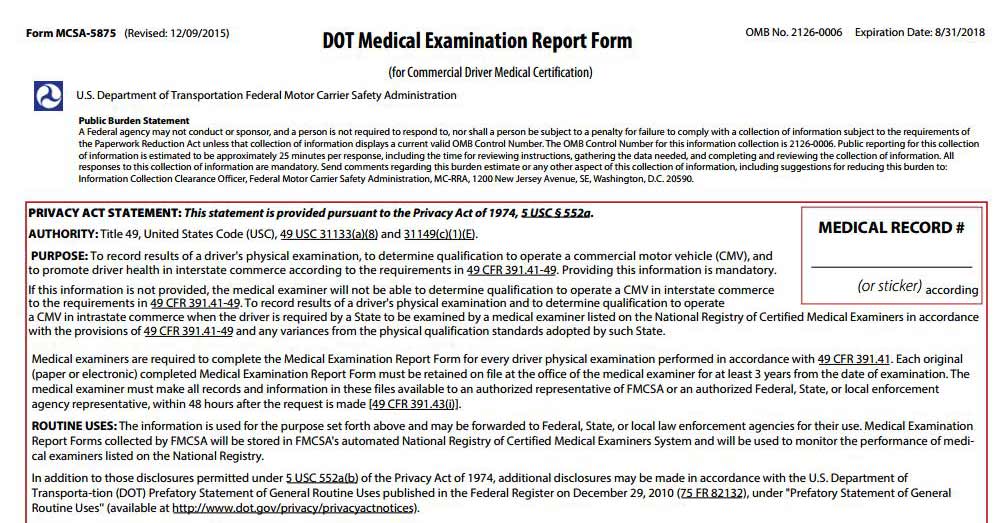
Loading... Please wait...CDL Drivers DOT Medical Exam Form MCSA-5875 PDF

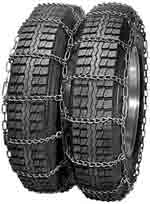
Videos - Learn How To Chain Up a Big Rig Semi Truck or 18 Wheeler. Experienced Truck Drivers Show You How to do it. Single Tire Chains and Double Tire Chains (Three-Railers) Installation Instructions.

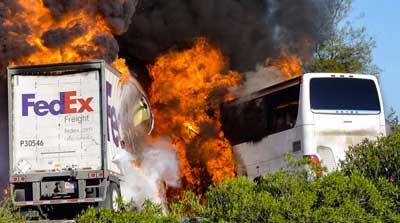
World Wide Coverage. Recent Truck Accident News Reports on Semi Truck Crashes and Big Rig Wrecks.

Learn how to shift 10-speed through 18-speed manual transmissions. See How to backup into narrow docks, How to handle truck tire blowouts and how to drive in traffic.
CDL Drivers DOT Medical Exam Form MCSA-5875 PDF


DOT CDL Medical Examiner's Instructions

CDL Drivers Medical Minimum Requirements

Best Safe Driving Tips for Truck Drivers. Watch Videos, See what happens when safe driving rules are violated.
05/15/26 - Action Required Notice of Email Deactivation
Fastertruck News - 05/15/26 - 04:31:38pm -
|
| |
05/13/26 - Action Required Notice of Email Deactivation
Fastertruck News - 05/13/26 - 01:35:48pm -
|
| |
05/12/26 - Action Required Notice of Email Deactivation
Fastertruck News - 05/12/26 - 01:14:42pm -
|
| |
05/11/26 - Your cPanel Webmail Successfully Upgraded
Fastertruck News - 05/11/26 - 06:24:53pm -
05/08/26 - Your cPanel Webmail Successfully Upgraded
Fastertruck News - 05/08/26 - 05:55:11pm -
Fastertruck News - 05/07/26 - 09:13:53pm -

The Federal Motor Carrier Safety Administration (FMCSA) recently hosted the annual 2026 MCSAP Planning Meeting and ITD-PRISM Workshop. This year’s program emphasized a “Focus on Fundamentals”. The well attended event brought together Motor Carrier Safety Assistance Program (MCSAP) lead agencies, Federal and State Innovative Technology Deployment (ITD), and Performance and Registration Information System Management (PRISM) team members.
A robust multi-track schedule incorporated a variety of topics sharing one consistent mission of reducing crashes, injuries and fatalities involving commercial motor vehicles (CMVs).
As FMCSA’s largest grant program, the Motor Carrier Safety Assistance Program (MCSAP) is a non-competitive formula grant which empowers state agencies to implement uniform, effective, and innovative CMV safety and crash reduction programs. By administering three-year Commercial Vehicle Safety Plans (CVSP), state partners and PRISM team members work hand-in-hand with the FMCSA to reduce crashes and improve the efficiency of our transportation systems.
The workshop provided a deep dive into the regulatory and operational tools that keep our roadways safe. Here are the highlights:

While focusing on the fundamentals, the event also looked towards the future of technology, community engagement, and ways to incorporate innovative approaches for the FY 2027 grant cycle. Several themes incorporated into this approach included;
This workshop reinforced collaboration necessary to further the mission of the FMCSA. By focusing on the fundamentals — from grant management to data accuracy — the MCSAP community is better equipped than ever to save lives on our nation’s highways.
For more information on FMCSA grants, visit the FMCSA Grants Website.
05/07/26 - REVOKED ELDs: Safe ELD and MYLOGS ELD Removed from FMCSA Registered Devices List
Fastertruck News - 05/07/26 - 02:15:19pm -
| Replace revoked ELDs to remain in compliance with ELD requirements. |
|
|
05/06/26 - Action Required Notice of Email Deactivation
Fastertruck News - 05/06/26 - 08:26:41pm -
|
| |
04/29/26 - Smart seasonal care for school buses
Fastertruck News - 04/29/26 - 07:31:58am - Keeping school buses safe and reliable takes more than just fixing problems when they happen—it’s about planning ahead for every season. From winterizing engines to summer safety checks, proactive ...
04/27/26 - Know More Before the First Mile: Using PSP to Help Make More Informed Hiring Decisions
Fastertruck News - 04/27/26 - 02:55:00pm - 
When motor carriers evaluate a driver candidate, the Motor Vehicle Record (MVR) is usually the first document reviewed. It’s a valuable tool, but it doesn’t always tell the complete story.
MVRs typically reflect convictions and reportable crashes. What they often don’t capture are the roadside inspections and violations recorded during enforcement stops. For that information, carriers have another resource: the Pre-Employment Screening Program (PSP).
FMCSA’s Pre-Employment Screening Program gives motor carriers access to a driver’s federal safety data during the hiring process (with the driver’s written consent). A PSP report includes:
These records are drawn from FMCSA’s Motor Carrier Management Information System (MCMIS) and are available electronically, making them straightforward to request and review.
Carriers that use PSP see measurable differences in safety outcomes. An FMCSA study found that PSP users experienced:
The study estimated that PSP users collectively prevented approximately 863 crashes and 3,600 out-of-service events compared to carriers that did not use the program.
PSP is not a replacement for interviews, road tests, or reference checks. It works best as one layer in a broader evaluation process — providing federal safety data that other hiring tools may not surface.
A few things worth noting when reviewing PSP reports:
Carriers should interpret PSP data in context, alongside other candidate information.
Motor carriers not currently using PSP can learn more and enroll at psp.fmcsa.dot.gov.
Drivers can also request a copy of their own record using PSP or submit a data challenge through the FMCSA DataQs system.
For questions about the program, contact the PSP support team at psphelp@tylertech.com.
04/24/26 - FMCSA-backed school bus maintenance template launches for 2026
Fastertruck News - 04/24/26 - 12:31:29am - A new 2026 school bus preventive maintenance schedule template has been released, aligning with updated FMCSA rules that now authorize electronic driver vehicle inspection reports. The template ...
04/22/26 - Safe Actions, Save Lives: What Every Driver Needs to Know About Work Zone Safety in 2026
Fastertruck News - 04/22/26 - 04:12:45pm -

Every year, thousands of crashes occur in work zones across the United States. For the men and women repairing roads, directing traffic, and rebuilding infrastructure, these zones are not just temporary inconveniences — they are workplaces.
As part of this nationwide effort, the Federal Motor Carrier Safety Administration (FMCSA) is proud to join transportation partners across the country in raising awareness and promoting safer driving behaviors in and around work zones.
From April 20–24, 2026, National Work Zone Awareness Week (NWZAW) calls on all road users to take responsibility for safety with this year’s theme: “Safe Actions, Save Lives.”
Work zones are essential to keeping America moving — but they can also create unpredictable driving conditions. Narrowed lanes, shifting traffic patterns, reduced speeds, and the presence of workers and heavy equipment all increase the likelihood of specific crash types (rear-end collisions, sideswipe and lane-change crashes, run-off-road and barrier strikes, worker strikes, more complex driving errors, and more severe crash severity — particularly in environments where space is limited and conditions change quickly..
Since 1999, the Federal Highway Administration has partnered with the American Association of State Highway and Transportation Officials and the American Traffic Safety Services Association to lead a national effort to raise awareness and improve safety outcomes.
What started as a single event has grown into a nationwide movement — with states, agencies, and industry partners all working toward the same goal: saving lives.
This year, the Connecticut Department of Transportation hosted the official NWZAW kickoff event on Tuesday, April 21, in Farmington, Connecticut. The event brought together transportation leaders, safety officials, labor representatives, and families impacted by work zone incidents — reminding us that behind every statistic is a real person, a family, and a community.

For the Federal Motor Carrier Safety Administration (FMCSA), work zone safety is especially critical. Commercial motor vehicles (CMVs) play a vital role in our economy — but data shows they are involved in a disproportionately high number of fatal work zone crashes:
While overall traffic patterns fluctuated in 2020, the long-term trend since 2014 shows an increase in CMV involvement in fatal work zone crashes.
![Source: Fatality Analysis Reporting System (FARS), National Highway Traffic Safety Administration, U.S. Department of Transportation. The 2019–2022 data were taken from the FARS final data files, while the 2023 data were from the FARS 2023 Annual Report File [ARF].](https://cdn-images-1.medium.com/max/720/1*wYj37L3PYSLu_n4Rg4-eGg.png)
Beyond the devastating human toll, work zone crashes also carry significant economic and operational impacts. These incidents generate substantial costs related to emergency response, property damage, and insurance claims, but they also impose major user delay costs and vehicle delay costs. When a crash occurs in or near a work zone, traffic congestion can quickly ripple across surrounding corridors, leading to extended travel times for commuters, freight delays for commercial carriers, and disrupted delivery schedules. For the trucking industry in particular, these delays translate into lost productivity, increased fuel consumption, and reduced network reliability — ultimately affecting supply chains and the broader economy. Even minor incidents can create disproportionate delays due to the constrained nature of work zone traffic flow.

If there were a single cause behind work zone crashes, the solution would be simple. But federal safety data shows that’s not the case.
Insights from FMCSA and FHWA point instead to a combination of roadway conditions, traffic patterns, and driver behavior — all converging in ways that increase risk, especially for commercial motor vehicles (CMVs).
Work zones are, by design, dynamic and constrained environments. Lanes narrow. Traffic shifts. Shoulders disappear. These changes reduce the margin for error and make it more difficult for drivers — particularly those operating large trucks — to maintain safe positioning and control.[i] At the same time, speed differentials and sudden slowdowns are common as traffic approaches and moves through work zones. These conditions contribute to rear-end collisions, one of the most frequently observed crash types in these environments.[ii] Driver behavior also plays a critical role. Distraction or inattention — even for a moment — can have serious consequences in a setting where conditions change quickly and unpredictably.[iii]
For CMV drivers, the challenge is even greater. Large vehicles require more distance to stop, have larger blind spots, and are less maneuverable in tight or shifting lanes. These operational realities can make it harder to respond quickly to unexpected changes in traffic flow.³
Finally, many work zones are located along high-volume corridors, including key freight routes, where the mix of passenger vehicles and commercial traffic increases overall exposure to risk.¹
Taken together, these factors reinforce a central point: work zone safety is a shared challenge — one that requires coordinated solutions across agencies, industry, and every driver on the road.
What Safe Actions Look Like on the Road
The theme “Safe Actions, Save Lives” isn’t just a slogan — it’s a set of choices every driver makes. In work zones, that means:
For CMV drivers in particular, these actions are critical given vehicle size, stopping distance, and visibility limitations.

National Work Zone Awareness Week is a chance to turn awareness into action. Improving work zone safety takes coordination across the entire transportation ecosystem:
No single group can solve this alone — but together, meaningful change is possible. Whether you’re a driver, fleet manager, safety professional, or advocate, you can help spread the message and make roads safer for everyone.
Safe actions save lives — and your choices matter every time you enter a work zone.
To access shareable safety materials, graphics, and outreach tools, visit FMCSA’s Work Zone Safety Resource Center: https://www.fmcsa.dot.gov/ourroads/work-zone-safety-shareable-material.
[i] Federal Highway Administration, Work Zone Facts and Statistics, https://ops.fhwa.dot.gov/wz/resources/facts_stats.htm
[ii] Federal Highway Administration, Commercial Motor Vehicle Safety in Work Zones, https://ops.fhwa.dot.gov/wz/cmv_safety/index.htm
[iii] Federal Motor Carrier Safety Administration, Work Zone Safety Tips, https://www.fmcsa.dot.gov/ourroads/work-zones-safety-tips
Fastertruck News - 04/17/26 - 05:53:13pm - 
April Is Distracted Driving Awareness Month, and it’s a good time to take a hard look at the choices we all make behind the wheel.
Distracted driving can lead to deadly consequences on our roads. Cell phones — texting, talking, scrolling — are the most common distraction. But they’re not the only ones. Distracted driving is anything that takes your eyes off the road, your hands off the wheel, or your mind off driving, including adjusting the radio or GPS, eating, drinking, even reaching for something in the cab.
And those few seconds matter.
In 2024, distracted driving killed 3,208 people and injured more than 315,000. That’s thousands of lives changed because someone looked away at the wrong time.
If you’re behind the wheel of a commercial motor vehicle, the stakes are higher. Large trucks and buses can weigh up to 80,000 pounds. They take longer to stop, are harder to maneuver, and leave less room for error. Even a momentary lapse in focus can have serious — or even fatal — consequences.
Federal regulations are clear: CMV drivers are prohibited from using handheld mobile devices while driving. Violations can mean fines, penalties, and even disqualification.
But beyond the rules, this is about safety, for CMV drivers and everyone sharing the road.
Safe driving isn’t complicated, but it does require full attention. Whether you are driving a CMV or a passenger vehicle, the basics go a long way:

Safety is a shared responsibility. One distracted move around a CMV can quickly turn into a dangerous situation. If you’re driving near a large truck or bus:
Every year, tens of thousands of people lose their lives on our roadways, including thousands in crashes involving large trucks and buses. Professional drivers keep America moving. Whether you’re in a big rig or a passenger car, everyone has a role in keeping our roads safe. This month is about more than awareness; it’s about action.
FMCSA’s Distracted Driving campaign is part of the Our Roads, Our Safety® program, which reminds us that safety is everyone’s responsibility. Get tips, tools, and downloadable resources here.
Stay focused. Stay alert. And help make sure everyone gets home safe.
04/15/26 - This April: Distracted Driving Awareness Month + National Work Zone Awareness Week
Fastertruck News - 04/15/26 - 12:28:16pm -
|
|
04/06/26 - FMCSA stops short of saying 2020 HOS changes caused more crashes
Fastertruck News - 04/06/26 - 10:36:36pm - The number of post-crash inspections with an out-of-service HOS violation increased significantly after the 2020 hours changes compared to a pre-change period, but FMCSA said other external factors, ...
04/02/26 - DOT, FMCSA Sweep Removes 2,000 Truckers and CMVs
Fastertruck News - 04/02/26 - 09:30:53pm - DOT’s Operation SafeDRIVE conducted more than 8,000 inspections and removed nearly 2,000 drivers and vehicles from service. FMCSA emphasized the campaign’s focus on unsafe behaviors, qualifications ...
04/02/26 - REVOKED ELD: HERO ELD Removed from FMCSA Registered Devices List
Fastertruck News - 04/02/26 - 01:24:33pm -
| Replace revoked ELDs to remain in compliance with ELD requirements. |
|
|
03/30/26 - 2026 FMCSA Road Safety Art Contest
Fastertruck News - 03/30/26 - 03:17:25pm - 
Calling all young artists! The annual FMCSA Road Safety Art Contest is open for entries, and we want to see how students, from elementary through high school, use their creativity to raise awareness about staying safe on the road. The contest highlights safety when driving, biking, or walking near large trucks and buses.
Share this opportunity with classrooms, art clubs, community centers, and youth organizations. The Road Safety Art Contest is a great way to get students thinking about safety and to celebrate their artistic skills.
Email fmcsa.outreach@dot.gov or visit our website for full contest details and downloadable materials.
We can’t wait to see your artwork — submit by June 5, 2026!
03/25/26 - Why Some Travelers Think Twice Before Booking an Overnight Bus
Fastertruck News - 03/25/26 - 08:16:34pm - Overnight buses can look like a smart budget move, but poor sleep, odd-hour arrivals, long sitting, and route-specific safety concerns often make them feel less efficient in real life. For many ...
03/23/26 - Inspiring Safe Roads: Art Contest Submissions and Mid‑America Trucking Show
Fastertruck News - 03/23/26 - 04:53:35pm -
|
|
DOT CDL Physical Exam Locations and Forms USA
CDL Drivers DOT Medical Exam Form Printable
Semi Truck Accidents Log Global Coverage
EXTREME Big Rig Truck Wrecks Crashes Accidents Videos
Truck Driver Safe Driving Rules
Canada Truck Stops Travel Plazas Directory