Loading... Please wait...
- Home
- Trucking Directories
-
Truckers News Feed
- Semi Truck Accidents News Reports
- Bus Accidents News Reports
- Current USA Diesel Fuel Prices
- Take Our Border Back Convoy News Coverage Live Streams Schedule Route Activities
- USA Real Time Road Conditions
- FMCSA DOT CDL News Regulations Enforcement Actions
- Trucking Companies Driver Scams Ripoffs Hiring Training Leasing
-
Video Library
- EXTREME Big Rig Truck Wrecks Crashes Accidents Videos
- Custom Big Rig Semi Truck Videos
- Tutorial Video National Registry Medical Examiner
- Big Rig Trucker Training Videos
- Heavy Haul Trucking Big Rig Videos
- FasterTrucks Road Train Videos
- Perils of Speed Limiters in Big Rig Trucks Videos
- Global Truckers Videos
-
Articles
- Top 50 Tips Every Truck Driver Should Know
- Truck Driver Safe Driving Rules
- Downsides of Driving a Truck in Winter
- How to Find a Truck Driving School
- Top 5 Characteristics Successful Truck Drivers
- Truck Driver Accident Procedures
- Owner Operator Tax Deductions
- DOT CDL Commercial Vehicle Inspection Procedures
- HOS New Hours of Service Rules FAQ Truckers
- SafetyPass Pro
- Search Trucking
- Contact Us

CDL Drivers DOT Medical Exam Form MCSA-5875 PDF
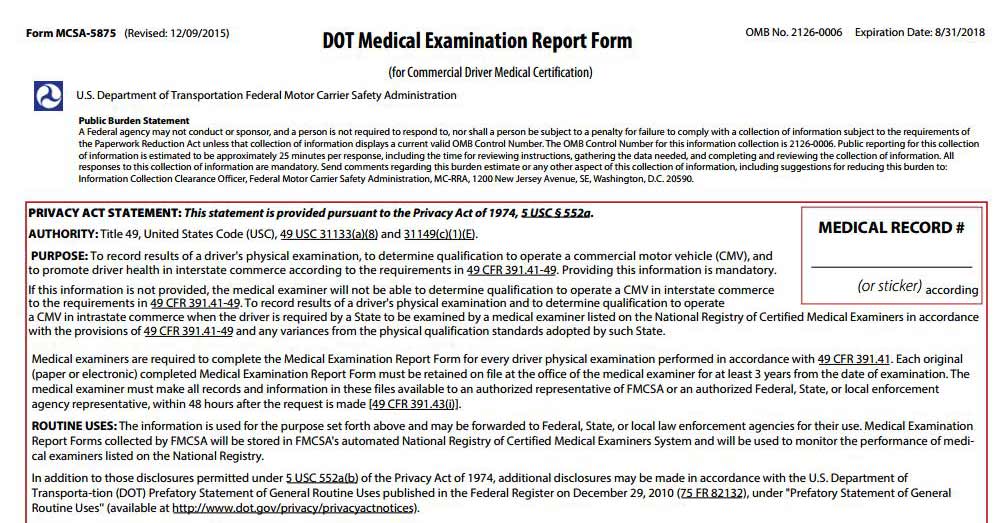
Current Form & Medical Card
Free to Print or Download.Videos How To Chain Up Big Trucks Tire Chains Instructions
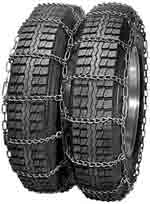
Videos - Learn How To Chain Up a Big Rig Semi Truck or 18 Wheeler. Experienced Truck Drivers Show You How to do it. Single Tire Chains and Double Tire Chains (Three-Railers) Installation Instructions.
News Reports Truck Accidents
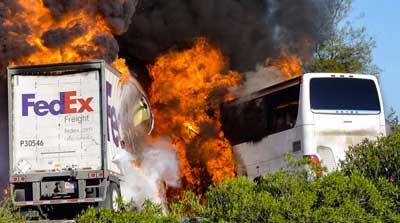
World Wide Coverage. Recent Truck Accident News Reports on Semi Truck Crashes and Big Rig Wrecks.
Big Rig Trucker Training Videos
Learn how to shift 10-speed through 18-speed manual transmissions. See How to backup into narrow docks, How to handle truck tire blowouts and how to drive in traffic.
CDL Drivers DOT Medical Exam Form MCSA-5875 PDF
Current Form & Medical Card
Free to Print or Download.CDL Drivers Medical Examination Physicians Instructions

DOT CDL Medical Examiner's Instructions
CDL Drivers Medical Examination Requirements
CDL Drivers Medical Minimum Requirements
Truck Driver Safe Driving Rules
Best Safe Driving Tips for Truck Drivers. Watch Videos, See what happens when safe driving rules are violated.
- Home
- Truckers News Feed
- FMCSA DOT CDL News Regulations Enforcement Actions
FMCSA DOT CDL News Regulations Enforcement Actions
04/24/26 - FMCSA-backed school bus maintenance template launches for 2026
Fastertruck News - 04/24/26 - 12:31:29am - A new 2026 school bus preventive maintenance schedule template has been released, aligning with updated FMCSA rules that now authorize electronic driver vehicle inspection reports. The template ...
04/22/26 - Safe Actions, Save Lives: What Every Driver Needs to Know About Work Zone Safety in 2026
Fastertruck News - 04/22/26 - 04:12:45pm -
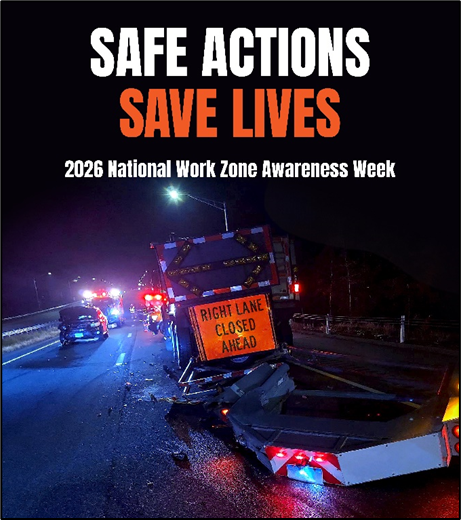
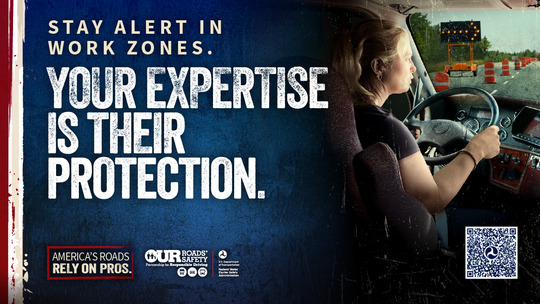
National Work Zone Awareness Week (April 20–24, 2026) is a reminder that one decision behind the wheel can save a life — or cost one.
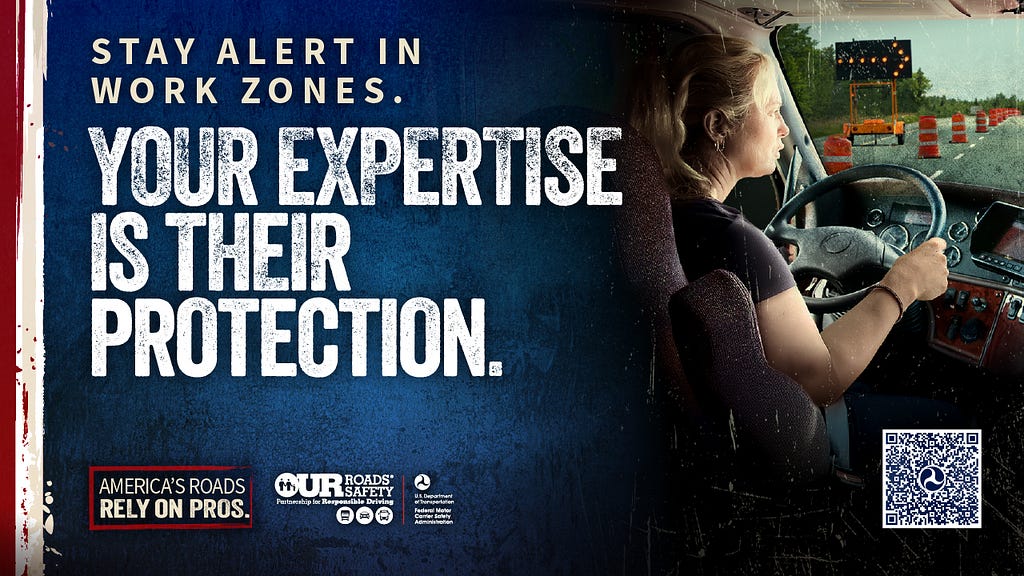
Every year, thousands of crashes occur in work zones across the United States. For the men and women repairing roads, directing traffic, and rebuilding infrastructure, these zones are not just temporary inconveniences — they are workplaces.
As part of this nationwide effort, the Federal Motor Carrier Safety Administration (FMCSA) is proud to join transportation partners across the country in raising awareness and promoting safer driving behaviors in and around work zones.
From April 20–24, 2026, National Work Zone Awareness Week (NWZAW) calls on all road users to take responsibility for safety with this year’s theme: “Safe Actions, Save Lives.”
Why Work Zone Safety Still Demands Attention
Work zones are essential to keeping America moving — but they can also create unpredictable driving conditions. Narrowed lanes, shifting traffic patterns, reduced speeds, and the presence of workers and heavy equipment all increase the likelihood of specific crash types (rear-end collisions, sideswipe and lane-change crashes, run-off-road and barrier strikes, worker strikes, more complex driving errors, and more severe crash severity — particularly in environments where space is limited and conditions change quickly..
Since 1999, the Federal Highway Administration has partnered with the American Association of State Highway and Transportation Officials and the American Traffic Safety Services Association to lead a national effort to raise awareness and improve safety outcomes.
What started as a single event has grown into a nationwide movement — with states, agencies, and industry partners all working toward the same goal: saving lives.
This year, the Connecticut Department of Transportation hosted the official NWZAW kickoff event on Tuesday, April 21, in Farmington, Connecticut. The event brought together transportation leaders, safety officials, labor representatives, and families impacted by work zone incidents — reminding us that behind every statistic is a real person, a family, and a community.
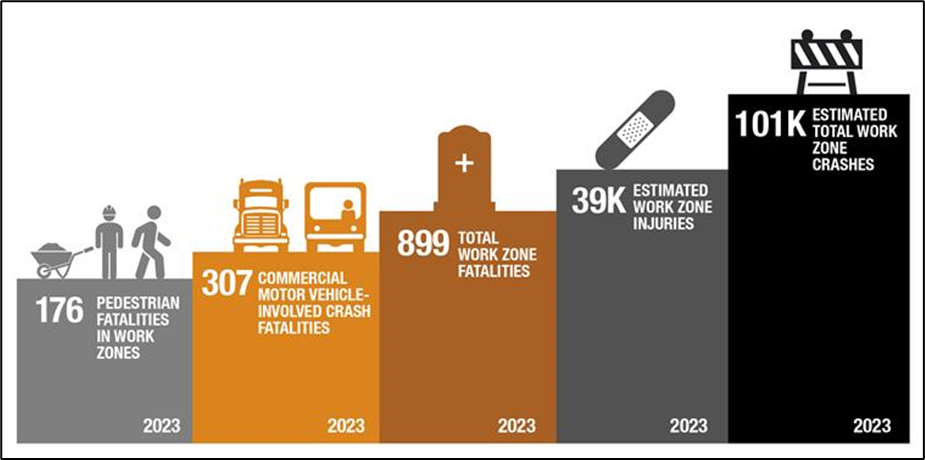
The CMV Factor: A Critical Safety Challenge
For the Federal Motor Carrier Safety Administration (FMCSA), work zone safety is especially critical. Commercial motor vehicles (CMVs) play a vital role in our economy — but data shows they are involved in a disproportionately high number of fatal work zone crashes:
- Over 30% of fatal work zone crashes on urban interstates involve CMVs
- More than 50% on rural interstates
- Compared to 10–13% involvement in non-work zone fatal crashes
While overall traffic patterns fluctuated in 2020, the long-term trend since 2014 shows an increase in CMV involvement in fatal work zone crashes.
![Source: Fatality Analysis Reporting System (FARS), National Highway Traffic Safety Administration, U.S. Department of Transportation. The 2019–2022 data were taken from the FARS final data files, while the 2023 data were from the FARS 2023 Annual Report File [ARF].](https://cdn-images-1.medium.com/max/720/1*wYj37L3PYSLu_n4Rg4-eGg.png)
Beyond the devastating human toll, work zone crashes also carry significant economic and operational impacts. These incidents generate substantial costs related to emergency response, property damage, and insurance claims, but they also impose major user delay costs and vehicle delay costs. When a crash occurs in or near a work zone, traffic congestion can quickly ripple across surrounding corridors, leading to extended travel times for commuters, freight delays for commercial carriers, and disrupted delivery schedules. For the trucking industry in particular, these delays translate into lost productivity, increased fuel consumption, and reduced network reliability — ultimately affecting supply chains and the broader economy. Even minor incidents can create disproportionate delays due to the constrained nature of work zone traffic flow.
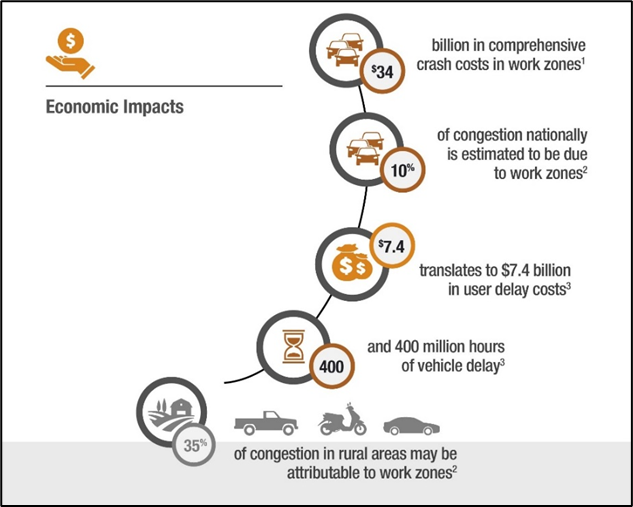
What’s Driving the Risk?
If there were a single cause behind work zone crashes, the solution would be simple. But federal safety data shows that’s not the case.
Insights from FMCSA and FHWA point instead to a combination of roadway conditions, traffic patterns, and driver behavior — all converging in ways that increase risk, especially for commercial motor vehicles (CMVs).
Work zones are, by design, dynamic and constrained environments. Lanes narrow. Traffic shifts. Shoulders disappear. These changes reduce the margin for error and make it more difficult for drivers — particularly those operating large trucks — to maintain safe positioning and control.[i] At the same time, speed differentials and sudden slowdowns are common as traffic approaches and moves through work zones. These conditions contribute to rear-end collisions, one of the most frequently observed crash types in these environments.[ii] Driver behavior also plays a critical role. Distraction or inattention — even for a moment — can have serious consequences in a setting where conditions change quickly and unpredictably.[iii]
For CMV drivers, the challenge is even greater. Large vehicles require more distance to stop, have larger blind spots, and are less maneuverable in tight or shifting lanes. These operational realities can make it harder to respond quickly to unexpected changes in traffic flow.³
Finally, many work zones are located along high-volume corridors, including key freight routes, where the mix of passenger vehicles and commercial traffic increases overall exposure to risk.¹
Taken together, these factors reinforce a central point: work zone safety is a shared challenge — one that requires coordinated solutions across agencies, industry, and every driver on the road.
What Safe Actions Look Like on the Road
The theme “Safe Actions, Save Lives” isn’t just a slogan — it’s a set of choices every driver makes. In work zones, that means:
- Slowing down and obeying posted speed limits
- Staying alert and eliminating distractions
- Maintaining safe following distances
- Expecting sudden stops or lane changes
- Watching for workers and equipment near travel lanes
For CMV drivers in particular, these actions are critical given vehicle size, stopping distance, and visibility limitations.
Take Action: Be Part of the Solution
National Work Zone Awareness Week is a chance to turn awareness into action. Improving work zone safety takes coordination across the entire transportation ecosystem:
- Federal, state, and local agencies
- Law enforcement and emergency responders
- Construction and maintenance crews
- Fleet operators and professional drivers
- Everyday motorists
No single group can solve this alone — but together, meaningful change is possible. Whether you’re a driver, fleet manager, safety professional, or advocate, you can help spread the message and make roads safer for everyone.
Safe actions save lives — and your choices matter every time you enter a work zone.
To access shareable safety materials, graphics, and outreach tools, visit FMCSA’s Work Zone Safety Resource Center: https://www.fmcsa.dot.gov/ourroads/work-zone-safety-shareable-material.
[i] Federal Highway Administration, Work Zone Facts and Statistics, https://ops.fhwa.dot.gov/wz/resources/facts_stats.htm
[ii] Federal Highway Administration, Commercial Motor Vehicle Safety in Work Zones, https://ops.fhwa.dot.gov/wz/cmv_safety/index.htm
[iii] Federal Motor Carrier Safety Administration, Work Zone Safety Tips, https://www.fmcsa.dot.gov/ourroads/work-zones-safety-tips
Fastertruck News - 04/17/26 - 05:53:13pm - 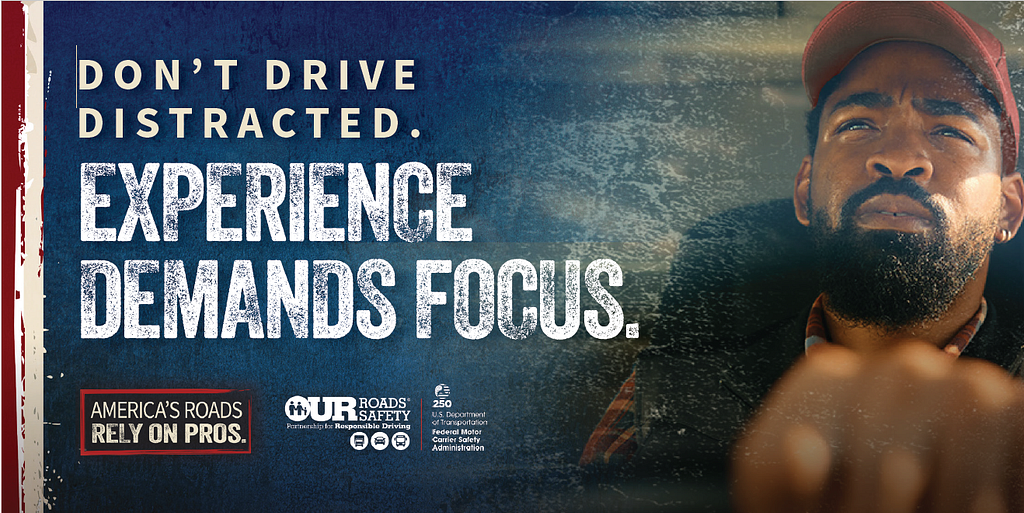
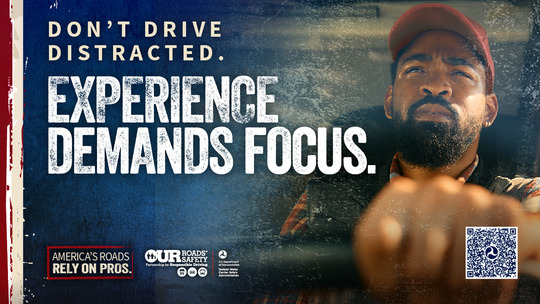
April Is Distracted Driving Awareness Month, and it’s a good time to take a hard look at the choices we all make behind the wheel.
Distracted driving can lead to deadly consequences on our roads. Cell phones — texting, talking, scrolling — are the most common distraction. But they’re not the only ones. Distracted driving is anything that takes your eyes off the road, your hands off the wheel, or your mind off driving, including adjusting the radio or GPS, eating, drinking, even reaching for something in the cab.
And those few seconds matter.
In 2024, distracted driving killed 3,208 people and injured more than 315,000. That’s thousands of lives changed because someone looked away at the wrong time.
Why this matters for CMV drivers
If you’re behind the wheel of a commercial motor vehicle, the stakes are higher. Large trucks and buses can weigh up to 80,000 pounds. They take longer to stop, are harder to maneuver, and leave less room for error. Even a momentary lapse in focus can have serious — or even fatal — consequences.
Federal regulations are clear: CMV drivers are prohibited from using handheld mobile devices while driving. Violations can mean fines, penalties, and even disqualification.
But beyond the rules, this is about safety, for CMV drivers and everyone sharing the road.
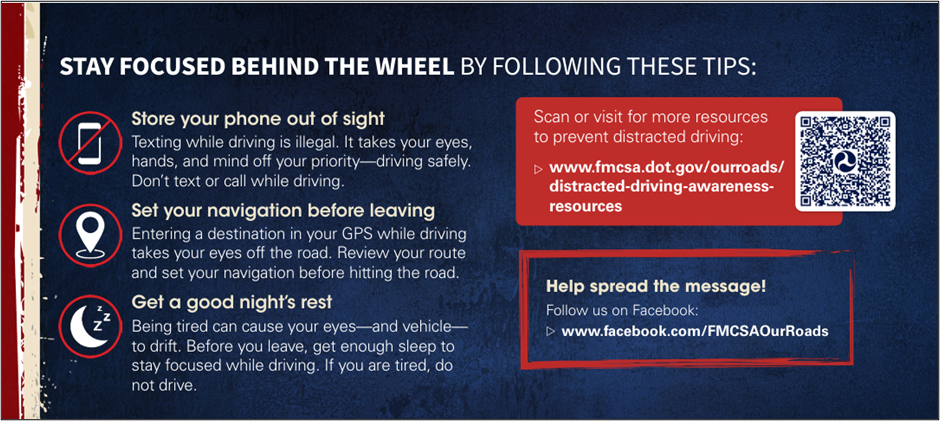
Simple steps that save lives
Safe driving isn’t complicated, but it does require full attention. Whether you are driving a CMV or a passenger vehicle, the basics go a long way:
- Need to send a message? Pull over and park safely.
- Set your GPS and route before you start driving.
- Don’t scroll through apps or reach for your phone.
- Ask a passenger to handle calls or texts.
- If you’re struggling, put your phone out of reach — glove box, back seat, or cab storage.
- Get enough rest. Drowsy driving is distraction, too.
Driving around trucks and buses? Stay alert.
Safety is a shared responsibility. One distracted move around a CMV can quickly turn into a dangerous situation. If you’re driving near a large truck or bus:
- Give them space — they need more time to stop
- Stay out of blind spots
- Don’t cut in front of them
- Stay focused and off your phone
Take action — on and off the road
Every year, tens of thousands of people lose their lives on our roadways, including thousands in crashes involving large trucks and buses. Professional drivers keep America moving. Whether you’re in a big rig or a passenger car, everyone has a role in keeping our roads safe. This month is about more than awareness; it’s about action.
- Remind your friends and family: if you’re driving, that’s your only job
- Speak up if your driver is distracted
- Ask others to commit to distraction-free driving
- Share the message and help spread awareness
FMCSA’s Distracted Driving campaign is part of the Our Roads, Our Safety® program, which reminds us that safety is everyone’s responsibility. Get tips, tools, and downloadable resources here.
Stay focused. Stay alert. And help make sure everyone gets home safe.
04/15/26 - This April: Distracted Driving Awareness Month + National Work Zone Awareness Week
Fastertruck News - 04/15/26 - 12:28:16pm -
|

|
|

04/06/26 - FMCSA stops short of saying 2020 HOS changes caused more crashes
Fastertruck News - 04/06/26 - 10:36:36pm - The number of post-crash inspections with an out-of-service HOS violation increased significantly after the 2020 hours changes compared to a pre-change period, but FMCSA said other external factors, ...
04/02/26 - DOT, FMCSA Sweep Removes 2,000 Truckers and CMVs
Fastertruck News - 04/02/26 - 09:30:53pm - DOT’s Operation SafeDRIVE conducted more than 8,000 inspections and removed nearly 2,000 drivers and vehicles from service. FMCSA emphasized the campaign’s focus on unsafe behaviors, qualifications ...
04/02/26 - REVOKED ELD: HERO ELD Removed from FMCSA Registered Devices List
Fastertruck News - 04/02/26 - 01:24:33pm -
| Replace revoked ELDs to remain in compliance with ELD requirements. |
|



|
|
03/30/26 - 2026 FMCSA Road Safety Art Contest
Fastertruck News - 03/30/26 - 03:17:25pm - 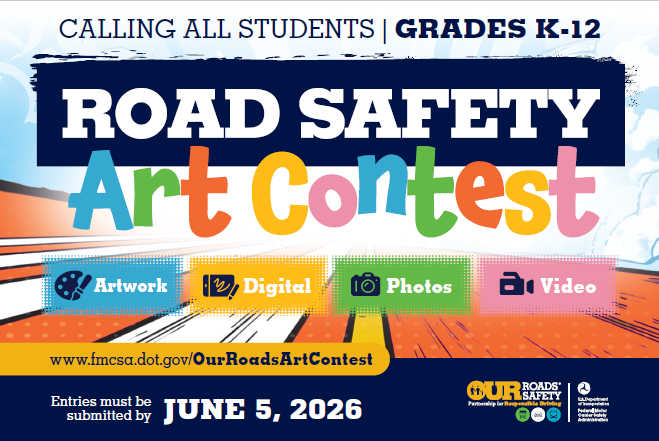
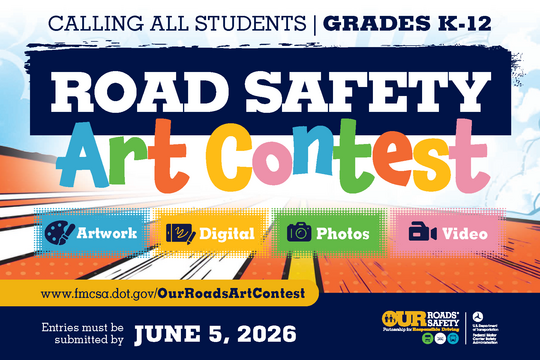
Calling all young artists! The annual FMCSA Road Safety Art Contest is open for entries, and we want to see how students, from elementary through high school, use their creativity to raise awareness about staying safe on the road. The contest highlights safety when driving, biking, or walking near large trucks and buses.
Why enter?
- Participating in the Road Safety Art Contest is a meaningful way for students to raise awareness about roadway safety and inspire safer behaviors in their communities through the power of art.
- Winners receive a framed copy of their artwork and an award certificate.
- Winning artwork will be featured in a winner announcement video that is showcased on FMCSA’s Facebook, Instagram, and X social media accounts and highlighted throughout FMCSA’s website.
- Winning art will also appear in the 2027 Road Safety Art Contest Calendar. Download the 2026 Road Safety Art Contest Calendar!
How to enter
- Submit your artwork and the completed entry form by June 5, 2026.
- Email entries to: fmcsa.outreach@dot.gov.
- Full rules, submission guidelines, and the entry form are available at: www.fmcsa.dot.gov/OurRoadsArtContest.
Tips for students and teachers
- Focus on clear, positive safety messages — think about what drivers, bicyclists, and pedestrians should remember when they’re near large trucks and buses.
- Use bold colors and simple compositions so your message reads easily at a glance.
- If submitting a physical piece, follow the contest page instructions for photographing or scanning artwork to make a clean digital submission.
- Teachers and parents: encourage students to be original and to explain the safety message behind their artwork — short artist statements can deepen the impact.
Spread the word
Share this opportunity with classrooms, art clubs, community centers, and youth organizations. The Road Safety Art Contest is a great way to get students thinking about safety and to celebrate their artistic skills.
Questions?
Email fmcsa.outreach@dot.gov or visit our website for full contest details and downloadable materials.
We can’t wait to see your artwork — submit by June 5, 2026!
03/25/26 - Why Some Travelers Think Twice Before Booking an Overnight Bus
Fastertruck News - 03/25/26 - 08:16:34pm - Overnight buses can look like a smart budget move, but poor sleep, odd-hour arrivals, long sitting, and route-specific safety concerns often make them feel less efficient in real life. For many ...
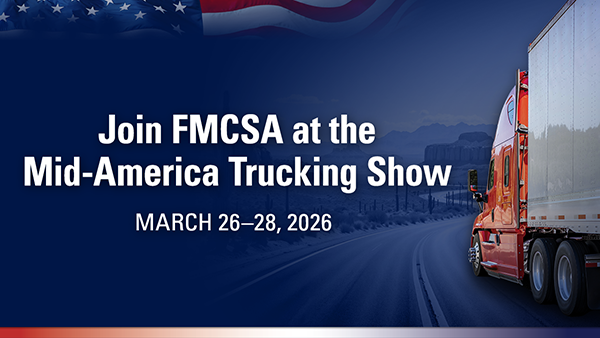
03/23/26 - Inspiring Safe Roads: Art Contest Submissions and Mid‑America Trucking Show
Fastertruck News - 03/23/26 - 04:53:35pm -
|

|
|
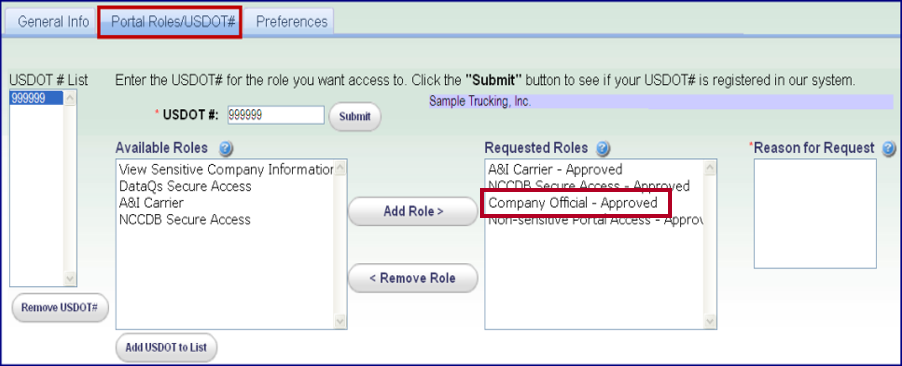
03/12/26 - Verify Your FMCSA Portal Company Official
Fastertruck News - 03/12/26 - 06:18:54pm -
| Prepare for Motus by confirming the correct person is listed in the FMCSA Portal. |
|





|
|
03/02/26 - FMCSA Seeks 18 Drivers to Help Test HOS Pilot Programs
Fastertruck News - 03/02/26 - 06:17:52pm -
|

Fastertruck News - 02/28/26 - 07:26:44am - The Department of Transportation has announced that more than 550 CDL training schools found in violation of the Federal Motor Carrier Safety Administration (FMCSA)’s standards of safety received ...
02/28/26 - FMCSA boots more than 500 CDL trainers from registry
Fastertruck News - 02/28/26 - 07:26:44am - Over the course of five days, the FMCSA said it conducted 1,426 on-site investigations of driver training providers.
02/25/26 - REINSTATED ELD: Forward Thinking Systems—Field Warrior ELD (BYOD)
Fastertruck News - 02/25/26 - 03:42:53pm -
| Motor carriers and drivers may now use Forward Thinking Systems—Field Warrior ELD (BYOD) to record and transfer hours of service data. |
|
|
|
02/23/26 - FMCSA shuts down 500 'CDL mills' after wave of in-person audits
Fastertruck News - 02/23/26 - 10:35:51pm - A sweep of in-person audits in December saw 448 schools shut down for failing to meet training/safety standards. Another 109 schools shut themselves down after learning they'd be audited.
Fastertruck News - 02/23/26 - 05:40:37pm - All truckers and bus drivers will have to take their commercial driver’s license tests in English as the Trump administration expands its aggressive campaign to improve safety in the industry and get ...
02/19/26 - Prepare for Motus: USDOT Registration System
Fastertruck News - 02/19/26 - 06:21:39pm -
| Update your FMCSA Portal account to prepare for the launch of Motus. |
|
|
|
02/13/26 - FMCSA’s New Discretionary Grants Toolkit Has Arrived
Fastertruck News - 02/13/26 - 04:55:25pm -
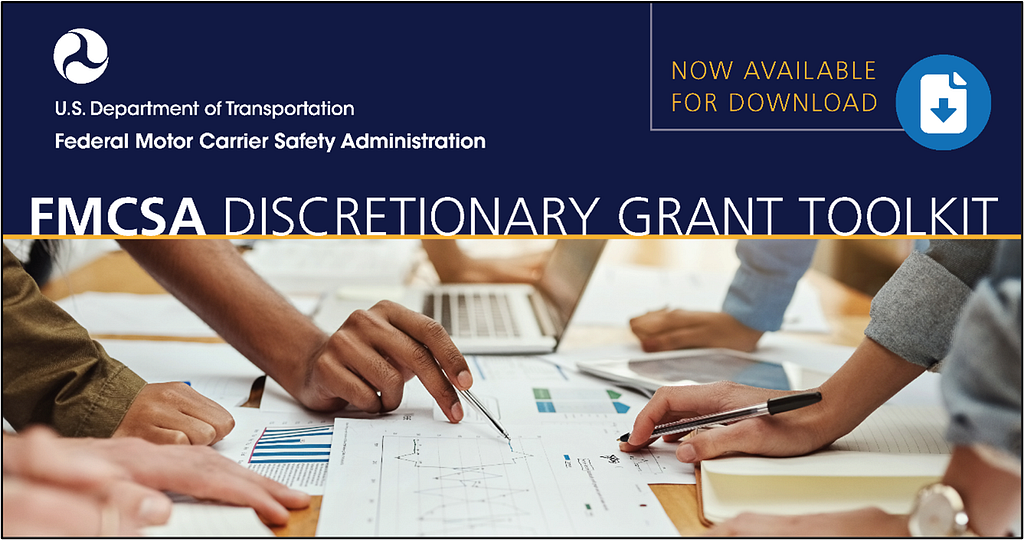
If you missed the last federal grant cycle, there’s good news: you’re not out of the game. While we celebrate this year’s grant recipients for their successful proposals, now is the perfect time to start preparing for the next round. The Federal Motor Carrier Safety Administration (FMCSA) has released a Discretionary Grants Toolkit — a comprehensive, self-paced resource designed to help transportation visionaries like you get a head start and be ready to apply for a discretionary, or competitive, grant next time.
FMCSA’s toolkit offers thorough checklists for each application stage: planning, submitting, managing, and closing out discretionary grants. By understanding the application process now, you’ll be ready to hit the ground running when the next round opens. This toolkit is packed with step-by-step guidance, resources, and grant-specific details to streamline the process from idea to award.
If your organization is new to FMCSA grants, the post-award section of the grant management checklist may provide helpful guidance.
FMCSA Grants Webpage: Your Central Hub
Together, these tools give you a strong foundation to begin preparing, but the Toolkit is just the starting point. For the most up-to-date information and a broader set of resources, FMCSA’s Grants webpage serves as the central hub for everything you need to navigate the full application cycle, including a full overview of the application process, phases (Pre-Award, Award, Post-Award), and tools for each step. Bookmark this because it’s your one-stop gateway for:
- Detailed NOFO announcements
- Application timelines and submission instructions
- Post-award guidelines for managing funds and project reporting
Beyond the Toolkit, FMCSA offers a well-stocked Resources for Grants page featuring:
- Downloadable PDFs like:
- Grants Opportunities Overview
- Tips for Completing Your FMCSA Grant Application
- Before You Apply
- Application Process
- Recorded webinars and presentations packed with insights and FAQs
A Closer Look at the Webinars
FMCSA’s Discretionary Grant Program Technical Assistance Webinar Series covers critical areas about applying. These sessions — including recordings, slides, and FAQs — are outstanding preparation tools whether you’re exploring or refining proposals for High Priority (HP), Commercial Driver’s License Program Implementation (CDLPI), or Commercial Motor Vehicle Operator Safety Training (CMVOST) funds.
- High Priority (HP) Program Overview — Lays out objectives, eligibility rules, and review criteria.
- CDLPI & CMVOST Grant Overview — Explains goals, requirements, review process for these two grant types.
How to Get Ready for Next Year’s Application Season
Preparing a strong grant application takes time, planning, and the right resources. The good news is that you don’t have to wait until the next funding notice is released to begin. By laying the groundwork now, you’ll position yourself for a more competitive application when the next cycle opens. Here’s your proactive roadmap:
- Download the Toolkit from the FMCSA Discretionary Grants page now.
- Familiarize yourself with the major grant programs — like High Priority (HP), Commercial Driver’s License Program Implementation (CDLPI), Commercial Motor Vehicle Operator Safety Training (CMVOST) — to align your proposal effectively.
- Begin building your project narrative, budget, stakeholder partnerships, and compliance documents well in advance.
- Subscribe to updates on FMCSA’s website here to stay alert for upcoming Notices of Funding Opportunity (NOFOs) hosted on Grants.gov.
Use this toolkit as a springboard to transform missed opportunities into future successes. With the right proposal, your organization could be selected for funding to advance CMV safety.
02/12/26 - REVOKED ELDs: 9 ELDs Removed from FMCSA Registered Devices List
Fastertruck News - 02/12/26 - 07:45:05pm -
| Replace revoked ELDs to remain in compliance with ELD requirements. |
|
|
|
DOT CDL Physical Exam Locations and Forms USA
CDL Drivers DOT Medical Exam Form Printable
Semi Truck Accidents Log Global Coverage
EXTREME Big Rig Truck Wrecks Crashes Accidents Videos
Truck Driver Safe Driving Rules
Canada Truck Stops Travel Plazas Directory